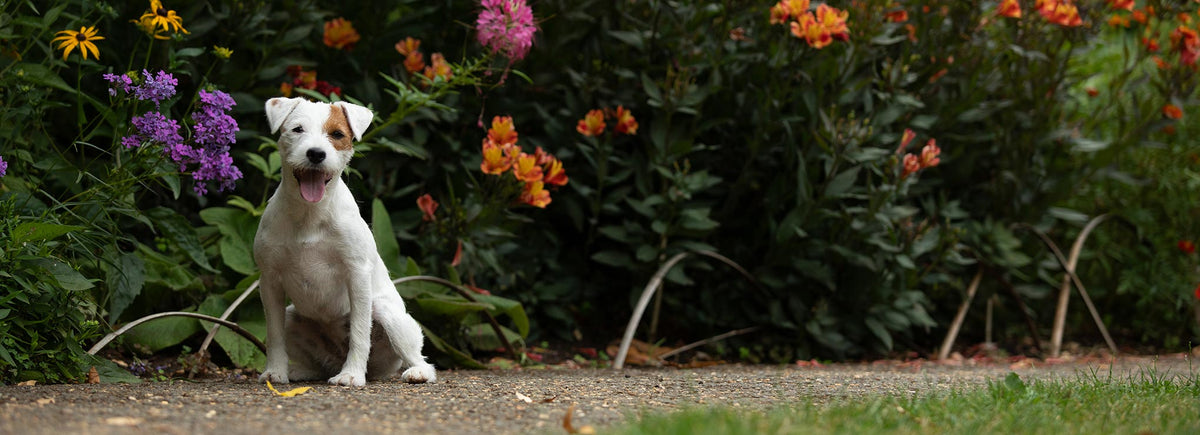
Some dogs seem to take everything in their stride, while others are naturally a little more sensitive to the world around them. Loud noises, unfamiliar people, new situations or changes in routine can all feel overwhelming — and for many dogs, fireworks and other sudden sounds can be a particularly difficult trigger.
Breed can play a part in how dogs respond to stress, but it’s only one factor. Personality, socialisation, experiences, environment and age all matter too.
So, which dog breeds are more prone to anxiety-related behaviours? Here are 10 breeds that may be more sensitive to certain fears or situations — plus the signs to look out for, how fears can change as they get older and how you can help.
10 dog breeds that can be prone to anxiety
1. Chihuahua

They might be small, but Chihuahuas are often very alert to everything happening around them. Research into social fearfulness has found Chihuahuas to be among the breeds more likely to show fear around other dogs². Small dogs overall were also more likely to show fear of dogs and unfamiliar people than larger dogs in the same research.
For some Chihuahuas, this sensitivity might show as barking, snarling, trying to move away, hiding behind their owner or becoming particularly alert when someone or another dog approaches. Early positive experiences with different people, dogs and environments can be particularly valuable, while making sure introductions happen at a pace your dog feels comfortable with.
2. Jack Russell Terrier

Confident, energetic and full of character, the Jack Russell might not be the first breed that springs to mind when you think of anxious dog breeds. However, some behavioural research¹ has identified Jack Russell Terriers as being more likely to show certain types of social fearfulness.
Their naturally alert nature also means they can be quick to notice changes in their surroundings. What looks like excitement, barking or over-reacting can sometimes be worth looking at more closely — particularly if it happens consistently around a particular trigger.
3. Shetland Sheepdog

Shetland Sheepdogs, or Shelties, are intelligent and responsive dogs originally bred for herding. That attentiveness can be a wonderful quality, but some Shelties can also be particularly sensitive to what is happening around them.
Behavioural research¹ has highlighted the breed in relation to fearfulness, including wariness around unfamiliar dogs and people and particular sensitivity to loud noises such as thunderstorms and fireworks.
4. Lagotto Romagnolo

With their curly coats and lively personalities, Lagotto Romagnolos are perhaps best known today as talented truffle-hunting dogs. They’re another breed that has appeared in behavioural research¹ looking at fearfulness, including sensitivity around unfamiliar people, dogs and certain environmental triggers.
Individual Lagottos can of course be extremely confident, but for more sensitive dogs, gradual positive introductions to new places, people and sounds can help them feel more comfortable.
5. Rough Collie

Rough Collies are often gentle, observant dogs that are very tuned in to their surroundings. One interesting finding is that they can be more sensitive to certain surfaces and heights. In everyday life, that might look like always walking on rugs or carpet, refusing to walk or run across tiles or laminate floor, stopping at the top of the stairs or running very quickly a surface they don’t feel secure on.
Fear of unfamiliar places and noise sensitivity have also been reported¹ within the breed, so some Rough Collies may simply need a little more time and reassurance when something feels new or uncertain.
6. Spanish Water Dog

Bright, energetic and originally bred as a working dog, the Spanish Water Dog can be highly attentive to both their owner and their surroundings. Behavioural research¹ has found comparatively high levels of social fearfulness within the breed, particularly around unfamiliar dogs and strangers.
Giving an anxious dog plenty of choice and space when meeting unfamiliar people or dogs can help prevent them from feeling overwhelmed.
7. Miniature Dachshund

Dachshunds may be small in stature but they’re famously big in personality. Research¹ comparing behavioural traits across breeds has identified differences in fearfulness, sound sensitivity and responses to the environment among smaller breeds, including Dachshunds.
If yours suddenly hides under furniture, becomes clingy or reluctant to settle when noises occur outside, it may be worth considering that they’re feeling scared or fearful.
8. Border Collie

Few breeds are quite as tuned into their environment as the Border Collie. Their intelligence, working drive and ability to notice even tiny movements make them fantastic working and training partners, but that awareness can sometimes translate into sensitivity too.
Behavioural research¹ has identified Border Collies as relatively high for some forms of fearfulness, while repetitive behaviours such as staring or light chasing have also been reported within the breed. Providing appropriate mental stimulation alongside plenty of opportunities to switch off and relax can be especially important for busy, highly observant dogs.
9. Miniature Schnauzer

Alert and full of personality, Miniature Schnauzers tend to keep a close eye on what’s happening around them. Research¹ into social fearfulness has found some Miniature Schnauzers to be more wary of unfamiliar people. That’s a good example of why describing a dog simply as “anxious” doesn’t always tell us very much. One dog might be completely comfortable around other dogs but find visitors to the home or unfamiliar people much harder to cope with.
10. Poodle

Poodles are intelligent, responsive dogs that are often particularly tuned into their owners and surroundings. Behavioural research¹ involving Poodles has found variation across areas including stranger-directed fear, dog-directed fear and separation-related behaviour.
As with all of these dog breeds prone to anxiety, that doesn’t mean Poodles are destined to be anxious. It simply reinforces how genetics, environment and individual experience can combine to shape the way a dog responds to the world.
What are the most common fears in dogs?
A large study involving more than 13,000 pet dogs found that 32% showed a high level of fear towards at least one type of noise. Fireworks were the most common noise trigger identified, with around 1 in 4 dogs surveyed showing a high level of fear towards fireworks¹.
While we know why fireworks are suddenly exploding overhead, our dogs don’t. One moment the house is quiet and the next there can be a loud BANG, flashes outside the window and unfamiliar smells in the air — with no obvious way for them to know when the next one might happen.
Other common fears identified included:
- 17% of dogs showing fear of other dogs
- 15% showing fear of strangers
- 11% showing fear of new situations¹
Dogs can also be sensitive to more than one thing. In the same research, more than half of the dogs considered highly noise-sensitive reacted strongly to multiple different noises. So a dog who struggles with fireworks anxiety may also be sensitive to thunderstorms, building work, traffic or other sudden sounds at different times of year.

What are the signs of anxiety in dogs?
We often picture an anxious dog shaking or hiding, but the early signs of anxiety in dogs can be much more subtle. Your dog might suddenly become more clingy, struggle to settle or start watching the windows when they hear something outside. Others might pace, pant, whine or repeatedly lick their lips.
Signs your dog could be feeling worried or uncomfortable include:
- becoming unusually clingy or seeking reassurance
- pacing or appearing restless
- becoming particularly alert to noises
- panting when they aren’t hot
- trembling or shaking
- whining or barking
- hiding or looking for somewhere to retreat
- freezing or crouching
- trying to move away or escape
- refusing treats or food they would normally enjoy
- avoiding eye contact
- holding their tail lower or tucked underneath them
The key is knowing what’s normal for your dog.
A dog who normally snoozes through the evening but suddenly starts following you from room to room when fireworks begin in the distance may be telling you they’re uncomfortable before more obvious signs appear. Recognising those early changes gives you a chance to support them sooner.
How to help your anxious or noise-sensitive dog
If your dog is naturally more sensitive, the best approach is usually a combination of behavioural support, careful management and calming support.
Gradual desensitisation, positive training and helping your dog build confidence around their triggers can all be valuable, particularly for recurring fears such as fireworks or loud noises. For more significant concerns, a qualified dog behaviourist can help create a plan tailored to your dog.
Alongside this, Dorwest Scullcap & Valerian Tablets can be given daily to naturally support calm behaviour while helping your dog remain alert and themselves. For predictable events such as fireworks, we recommend starting them around three weeks beforehand.
For unexpected bangs or stressful moments, Valerian Compound is a fast-acting liquid that can be used alongside the tablets for additional support when needed.
Our limited-edition Calming Duo combines both products, giving you daily calming support with Scullcap & Valerian Tablets and fast-acting Valerian Compound ready for those noisier or more challenging moments.
Can dogs become scared of fireworks as they get older?
Yes — a dog’s response to fireworks and other loud noises can change over time. Research involving more than 13,000 pet dogs found that noise sensitivity increased with age, particularly fear of thunder, while fear of surfaces and heights also became more common in older dogs.

That doesn’t mean ageing itself causes anxiety, but it does show that new sensitivities can develop. If your older dog suddenly becomes more fearful, it’s worth speaking to your vet to rule out any underlying health changes.
So even if your dog once slept through Bonfire Night, keep an eye out for subtle signs such as restlessness, becoming more alert to distant bangs or seeking out somewhere to hide.
If they’ve struggled before, prepare ahead of fireworks season with a familiar safe space, behavioural support, Scullcap & Valerian Tablets started in advance and Valerian Compound ready for unexpected bangs.
Why are some dogs more anxious than others?
Breed can be part of the answer — but it’s certainly not the whole story. A dog’s early socialisation, environment, routine, previous experiences and individual temperament can all influence how they respond to new or challenging situations. That’s why two dogs of exactly the same breed can be completely different. One Border Collie may happily sleep through fireworks while another becomes alert at the first distant bang. One Chihuahua might love meeting everyone on a walk while another prefers to keep their distance.
Getting to know your dog’s individual triggers and early signs is far more useful than relying on breed alone. Whether it’s a distant firework, an unfamiliar visitor or simply somewhere they’ve never been before, spotting those first signs that they’re feeling unsure means you can step in early and help them feel safer and more settled.
And for predictable events like fireworks season, preparing before the bangs begin can make a big difference — from creating their safe space and adjusting your routine to starting daily calming support and having something ready for those unexpected noisy moments.
If you have any questions or need help choosing which calming support is best for your pet, feel free to contact our friendly team of product experts on 01308 897272 or email info@dorwest.com.
References
- Salonen M, Sulkama S, Mikkola S, et al. *Prevalence, comorbidity, and breed differences in canine anxiety in 13,700 Finnish pet dogs.* Scientific Reports. 2020.
- Hakanen E, Mikkola S, Salonen M, et al. *Inadequate socialisation, inactivity, and urban living environment are associated with social fearfulness in pet dogs.* Scientific Reports. 2020.
- Hakanen E, Mikkola S, Salonen M, et al. *Active and social life is associated with lower non-social fearfulness in pet dogs.* Scientific Reports. 2020.
- Arata S, Takeuchi Y, Inoue M, Mori Y. *“Reactivity to Stimuli” Is a Temperamental Factor Contributing to Canine Aggression.* PLOS ONE. 2014.
- Shouldice VL, Edwards AM, Serpell JA, Niel L, Robinson JA. *Expression of Behavioural Traits in Goldendoodles and Labradoodles.* Animals. 2019.
- Lopes Fagundes AL, Hewison L, McPeake KJ, Zulch H, Mills DS. *Noise Sensitivities in Dogs: An Exploration of Signs in Dogs with and without Musculoskeletal Pain Using Qualitative Content Analysis.* Frontiers in Veterinary Science. 2018.