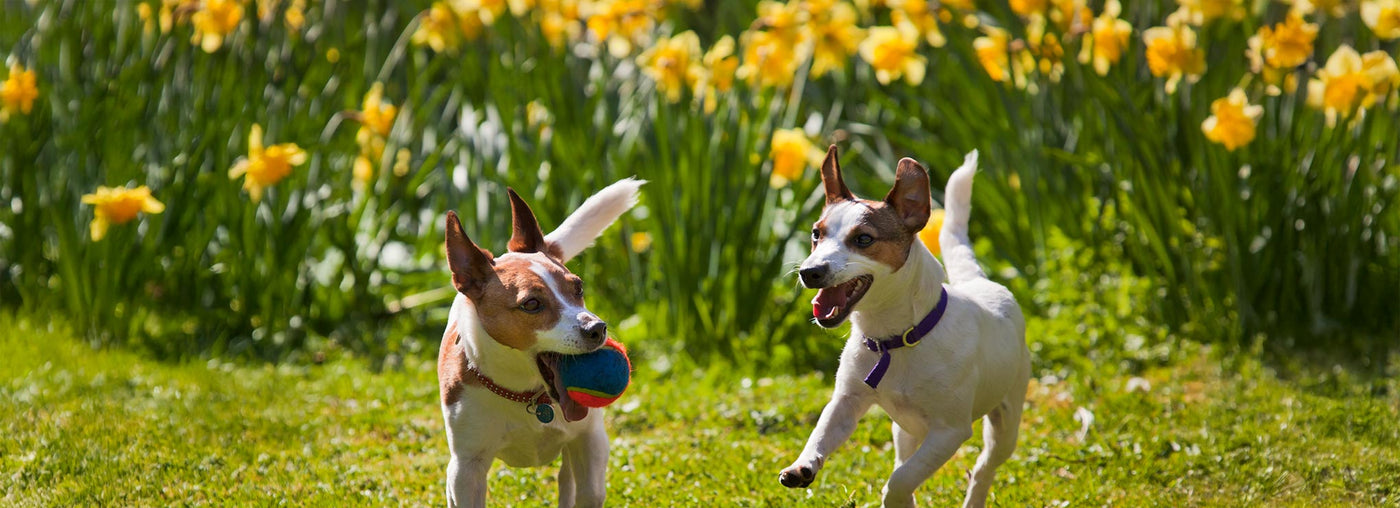
A bit of fresh air can do us all the world of good. The same applies to our dogs, who love nothing more than a lengthy sniff or zoomies around the garden as the weather warms up. But as the fresh green shoots of spring appear, a hidden danger often lurks in those pretty flower beds.
Before you let your four-legged friend out to enjoy the great outdoors, you might want to double-check: is your garden actually dog-friendly? While we love the splash of colour that spring bulbs bring, many contain naturally occurring toxins designed to protect the plant. The trouble is, if our dogs decide to have a nibble, some plants can be particularly harmful to them. So it’s worth being a little mindful of where you plant them, especially if your dog is a keen sniffer, digger or taste-tester, so you can enjoy your garden without the worry.
10 common spring flowers poisonous to dogs
To help you identify the risks, we’ve combined everything you need to know about the most common spring culprits into one easy-to-reference guide.
1. Daffodils (Narcissus)
- Toxic Part: The entire plant, but the bulbs have the highest concentration of toxins. Even the water in a vase containing daffodils can become poisonous.
- The Danger: They contain lycorine, an alkaloid that triggers the vomiting centre in the brain.
- Symptoms: Severe vomiting, hyper-salivation (drooling), diarrhoea, and in large amounts, tremors or heart rhythm issues.

2. Tulips & Hyacinths
- Toxic Part: The bulbs are the most dangerous. Dogs who love to dig are at the highest risk here.
- The Danger: These contain Tulipalin A and B, which cause intense tissue irritation.
- Symptoms: Profuse drooling, pawing at the mouth, and gastrointestinal upset. If a bulb is chewed, it can cause an increased heart rate and difficulty breathing.

3. Azaleas & Rhododendrons
- Toxic Part: The leaves and petals. Even a very small amount (0.2% of a dog's body weight) can be toxic.
- The Danger: They contain grayanotoxins, which disrupt the sodium channels in the body, affecting the skeletal and cardiac muscles.
- Symptoms: General weakness, vomiting, "drunken" walking (ataxia), collapse, and in severe cases, coma or death.

4. Bluebells
- Toxic Part: The entire plant, including the bulb.
- The Danger: These woodland favourites contain scillarens (cardiac glycosides) which slow the heart down.
- Symptoms: Stomach pain, vomiting, diarrhoea, and a dangerously low or irregular heart rate.

5. Lily of the Valley
- Toxic Part: The leaves, flowers, and berries.
- The Danger: This is one of the most dangerous spring plants, containing over 35 different types of cardiac glycosides.
- Symptoms: Vomiting, decreased heart rate, severe cardiac arrhythmias, and potentially fatal seizures.

6. Spring Crocus
- Toxic Part: The entire plant, particularly the bulb.
- The Danger: Note that the "Spring Crocus" is generally less toxic than the "Autumn Crocus," but it still causes significant irritation to the digestive tract.
- Symptoms: General vomiting, diarrhoea, and lethargy.

7. Iris
- Toxic Part: The bulbs and rhizomes (the thick roots).
- The Danger: The toxin irisin is concentrated underground, making it a major risk for dogs that like to help you "garden" by digging up new plantings.
- Symptoms: Increased salivation, lethargy, and bouts of vomiting or diarrhoea.

8. Sweet Peas
- Toxic Part: The seeds and pods.
- The Danger: These contain aminopropionitrile, which can affect the central nervous system if eaten in large quantities over time.
- Symptoms: Pacing, head pressing, weakness, and tremors.

9. Primroses
- Toxic Part: The leaves and stems.
- The Danger: While considered "low toxicity" compared to lilies, they contain primulin which is a mild irritant.
- Symptoms: Mild vomiting and occasionally a skin rash if the dog rolls in them.

10. Snowdrops
- Toxic Part: The bulb is the most toxic part of this early bloomer.
- The Danger: They contain galantamine, which can interfere with the nervous system.
- Symptoms: Abdominal pain, vomiting, and uncoordinated movement.

Should I remove these plants from my garden if I own a dog?
That's the big question! “Do I need to dig up my flower beds just to be safe?” The short answer is: not necessarily. It all depends on your dog’s personality and habits.
It is important to remember that almost all of these plants need to be ingested (chewed or swallowed) to pose a serious threat. If your dog is the type to enjoy a gentle sniff and then move on, these flowers are unlikely to cause a problem. However, if you have a curious puppy, a seasoned “counter-surfer” who’ll eat just about anything in sight, or a determined digger who might unearth buried bulbs, it’s worth taking a more cautious approach.
In these cases, consider positioning plants well out of reach or choosing safer setups, such as raised beds, wall-mounted planters, or sturdy pots placed in areas your dog can’t easily access. This way, you can still enjoy your garden while helping to keep your dog out of harms way from anything they shouldn’t be exploring.
The goal is general awareness. By knowing which plants carry a risk, you can supervise your dog more effectively or perhaps fence off a specific "danger zone" in your garden.
Important: If you are ever concerned that your dog has ingested a toxic plant, or if they are showing unusual symptoms like vomiting, lethargy, or heavy drooling, always consult your vet or an emergency pet professional immediately. It is always better to be safe and get a professional opinion early.
Extra garden safety tips for your dog
1. Secure the perimeter!
It’s not just the plants you need to worry about. The temptation for a dog to "take themselves for a walk" can be high in spring!
Firstly, ensure you have secure, solid fencing, with no opportunities to squeeze through any gaps. Look at your fencing through the eyes of your dog—consider their size and their agility. You might think an area is secure, but some dogs can jump higher than you might expect when a squirrel is involved!
Regularly checking your fencing is important. Wildlife may have found a new way into your garden, creating a gap your dog can use too. If your dog enjoys digging, check they haven't done so near the fence line, as over time, this creates a perfect escape tunnel.
2. The dangers of compost, tools, and water
A truly dog-friendly garden requires a bit of "housekeeping" beyond the flower beds.
- The dangers of compost: If you are a keen gardener, keep your compost heap fenced off. Old food products grow mould which creates compounds called mycotoxins. If ingested, these can cause vomiting, tremors, and even seizures. In some cases, surgery has even been required to remove ingested garden waste.
- Water features: Ponds are a lovely addition, but they are a potential drowning hazard. Once a dog's coat becomes waterlogged, it is very difficult for them to pull themselves out of steep-sided water. Use flat stones to create a "ramp" for leverage, or keep the area separated.
- Sharp tools & chemicals: Always put your shears and trowels away. A dog "zooming" at high speed can easily injure themselves on a forgotten tool. Likewise, if you use chemicals on your patio, plants or grass, always read the labels carefully; some can be deadly even in tiny amounts.
Time to enjoy your dog-friendly garden!
Now that the dangers are managed, it's time to have fun! Why not plant some herbs specifically for your dog? They add sensory stimulation and are perfectly safe to sniff or nibble.
- Lavender & Rosemary: Provide wonderful, calming aromas.
- Clivers (Stickyweed) or Wheatgrass: Dogs often enjoy discovering these during walkies, why not let them enjoy some at home?
- Grass: Many dogs love chewing on fresh long grass, you could always keep a patch of longer grass for them to nibble on, whilst they sniff around the garden!
Sitting in the garden with your dog is a lovely bonding experience. Make sure they have access to fresh water and the opportunity to head back inside for a nap when they’re done exploring.
Should you ever be concerned your dog has ingested something from your garden which they shouldn't have, always consult your vet immediately.
Find out more about Dorwest Herbs and our herbal remedies for dogs to improve their general health. If you have any questions, get in touch on 01308 897272 or email us at info@dorwest.com